








What is Intentional living?
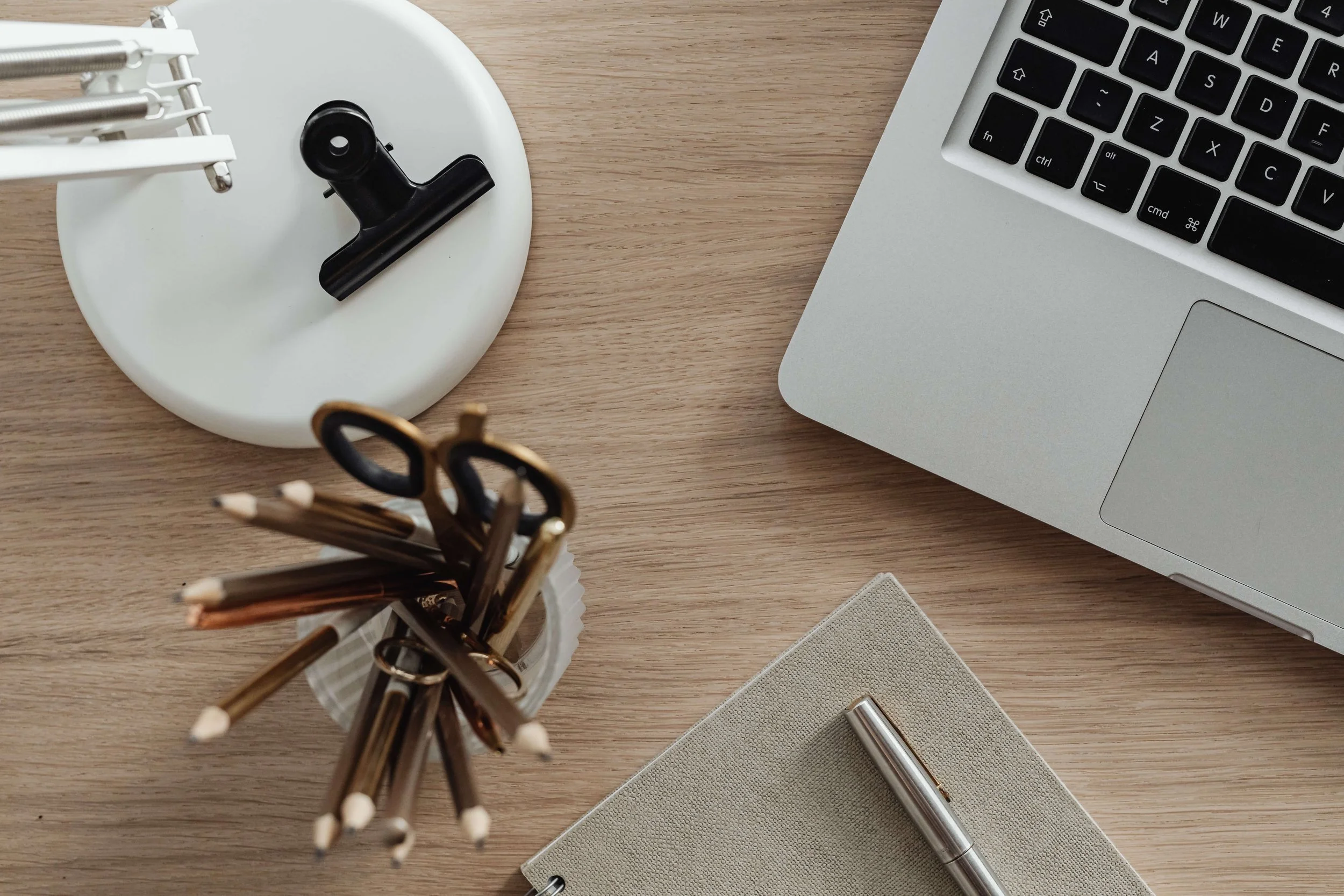
cLARITY AS A PRACTICE
Intentional living doesn’t usually arrive as a grand declaration. For me, it shows up in smaller moments—like the moment I crack open the blinds and let the morning light spill into a room that feels a little too quiet, or the moment it hits me that I’m tired in a way sleep won’t fix. It’s in the pause before I say yes. It’s in the cup of tea I make exactly the way I like it, not as a task to tick off, but as a way to come back to myself.
Living on autopilot can leave you feeling disconnected from your own life. Life can look full and beautiful on the outside.. busy, capable, even admirable and feel strangely misaligned on the inside. Like you’re playing a role you’ve outgrown.
“Intentional living begins the moment you notice the mismatch and decide to listen.”
the story were sold
The phrase “intentional living” gets tossed around like it’s a personality type. As if it belongs to a specific aesthetic: early mornings, colour-coded planners, smoothies, pilates memberships, and an entire pantry devoted to powdered dietary supplements. The message reads like advice, but it often feels like a rule, if you don’t do it like this, you’re not part of the club. Intentional living gets marketed like a lifestyle you can buy into, but in practice, it’s something you build from the inside out.
I don’t believe it’s a club that you can buy in to. I think it’s more like a relationship.
A relationship with your values. A relationship with your body. A relationship with your internal “yes” and internal “no.” And like any relationship worth having, it requires honesty, attention, and the willingness to come back when you drift. Intentionality, to me, starts internally, not externally. It’s belief-based. Values-based. It requires a why. Because when the ‘why’ is clear, the way you curate your life starts to match what’s actually true for you.
I think about this often, due to so many of the women I know (and so many versions of myself I’ve been) are operating in survival-shaped habits while calling it “discipline.” We live in a culture that rewards performance and productivity. It praises the woman who keeps going, who pushes through, who never needs too much and has a lot to give. And if you’re naturally a high achiever, or a burnt-out giver, or a mom trying to hold everyone’s needs at once, the world will gladly hand you an identity built around being capable.
But capability without spaciousness becomes a cage.
Spaciousness is one of the most underrated ingredients in wellness. Not the kind of spaciousness that requires a retreat or a week off work (though those are dreamy and helpful) but the kind you can create in the middle of a normal life. A tiny pocket of room where you can ask, Wait… is this actually working for me? Curiosity lives there. Adaptability lives there. And authenticity, your truest self, has a chance to show up.
That’s why intentional living matters. Because it’s not about looking like you have it together. It’s about living in a way that feels like you.
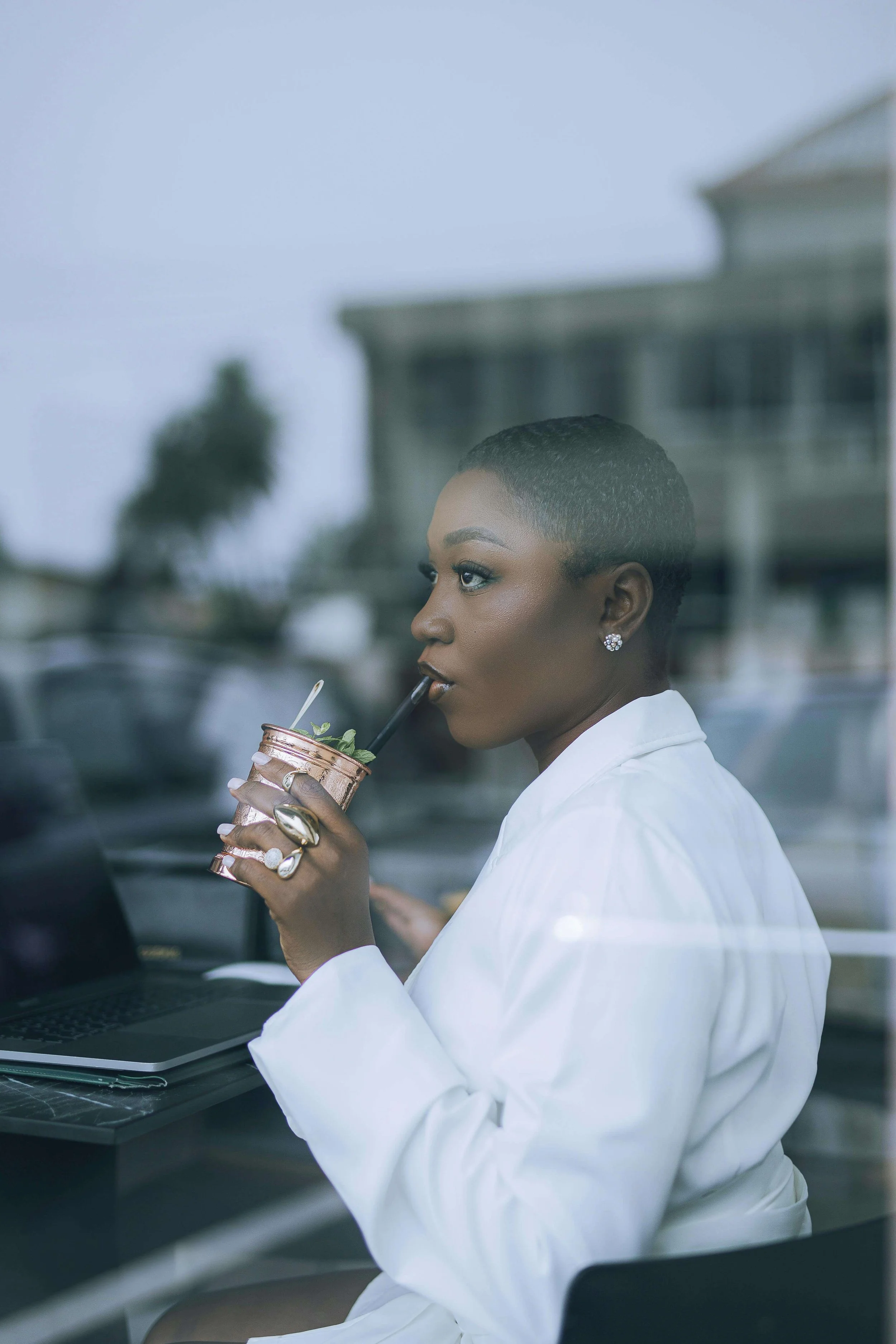
when fine stops working
The shift didn’t come from a dramatic breakdown. It came from a slow accumulation of I'm “fine.”
I was doing the things. Showing up. Handling responsibilities. Trying to be good, easy, cooperative. And then, in quieter moments, I would notice the signs: anxiety humming under the surface, a scattered mind, irritability that didn’t match the situation. Sometimes I felt frozen, like I couldn’t choose the next step, even when the next step was obvious. My body was telling the truth before my mouth did.
Underneath all that was a familiar pattern I’ve had to meet more than once: perfection or nothing. Catastrophizing. People-pleasing as a reflex. The old belief that if I could just do it “right,” then everything would feel stable.
But life doesn’t soften when you tighten your grip.
What softened things was a different kind of clarity: I realized I wasn’t tired because I was doing too much. I was tired because I was doing too much of what wasn’t aligned. Too much performing. Too much managing. Too much living by invisible rules I never actually agreed to.
And that’s when intentional living became less of a concept and more of a decision: I can’t control everything, but I can choose what I participate in. I can’t guarantee outcomes, but I can build a life that reflects my values. I can’t avoid discomfort, but I don’t have to pretend things are happening to prove I’m growing.
It was an “aha” moment. Not perfection. Just awareness. And a willingness to try again, differently.
rituals not rules
I don’t treat intentional living like a rigid system. I treat it like a set of interchangeable rituals that help me return to myself, especially when anxiety is loud and everything feels urgent or unsustainable. What helps me the most are practices that are simple, self-regulating, and realistic. Not rules. Not trends. Just anchors.
First, I make room for the truth before I make a plan.
When I feel scattered or irritable, my instinct at times is to push harder, to get stricter, get busier, get more “on top of it.” Now I try to pause long enough to ask what’s actually going on. Am I overwhelmed? Am I hungry? Am I overstimulated? Am I trying to please someone at my own expense? Intention begins with listening, because you can’t align with yourself if you don’t acknowledge what you’re feeling.
Second, I use my environment as a way to care for my nervous system.
There’s something almost spiritual about clearing a space when your mind feels cluttered. I’ll declutter an area, vacuum, empty the room bins—something about it makes me feel like I’m clearing the air too. I put music on out loud, filling the room. I open the blinds and let the sun in like it’s medicine. I refill the diffuser with a scent that makes my body open up. Or I’ll prepare a hot water bottle and hug it for comfort.. simple and deeply regulating. It’s about creating a space that supports who I am and what I need. This can look different for everyone.
Third, I return to small luxuries that don’t require permission.
This is where intentional living becomes beautifully personal. A cup of tea made exactly how I like it. Making my bed, an oddly powerful signal that my life is held. A shower where I do the full beauty routine if I have the capacity: shave, exfoliate, treatments, whatever feels nourishing rather than demanding. And if I don’t have the capacity, I let “good enough” be where I leave it at. The point isn’t to perform self care, it’s to receive it.
Fourth, I practice abundance through ordinary acts.
Preparing a meal from scratch, intentionally and creatively using what I already have in the fridge and cupboards, is one of my favourite ways to shift out of scarcity. It reminds me that I’m resourced. That I can make something beautiful from what I already have. And every now and then, I’ll take myself out for lunch. Not to prove independence, but to practice companionship with myself and know I’m worth showing up for.
Finally, I build gentler boundaries with my own mind.
When catastrophizing shows up, I try not to argue with it like it’s an enemy. I treat it like a frightened part of me that wants certainty. I remind myself: I can do my best without controlling everything. I can be responsible without being rigid. And I can choose ease when ease is available. This is where adaptability matters, because an intentional life is not a fixed life. It’s a responsive one.
“In practice, intentional living is often just a series of micro-choices that say, again and again: I’m listening. I’m adjusting. I’m choosing what fits for me.”
why this matters
When you zoom out, intentional living is less about self-improvement and more about self-trust and embodiment.
So much of modern life trains us to override ourselves. We override hunger cues to finish the task. We override exhaustion to meet the deadline. We override grief to be “strong.” We override our boundaries to keep the peace. And over time, that overriding becomes a kind of quiet abandonment of self—one we don’t notice until anxiety, irritability, and freeze responses start showing up as messengers.
From a psychological perspective, it makes sense. When your inner world feels unheard, your nervous system gets louder. Symptoms often aren’t flaws; they’re signals. They’re the body’s way of saying, something is going on and it needs your attention.
This is also where I think intentional living intersects with older wisdom—ancestral, cultural, communal. Across so many traditions, a good life is not measured by speed. It’s measured by alignment. By integrity. By being in relationship—with yourself, with others, with the season you’re in.
Peace isn’t just the absence of uncertainty, it’s knowing what’s yours to hold and what’s not.
Intentional living is choosing what matters to you. Your values. Your rituals. Your environment. Your yes. Your no. And then releasing the rest… outcomes, opinions, timelines.
coming home
I think about intentional living the way I think about coming home after a long day. You don’t arrive perfectly put together. You arrive as you are. You drop your bag. You sigh. You slow down. You return to yourself.
This isn’t about being good at wellness. You don’t have to perfect your routine or curate a life that looks a certain way to qualify. Intentional living is clarity as a practice. It’s the willingness to admit, gently, when something isn’t right for you, and the courage to adjust how you function under the systems and circumstances you’re living under.
Some days, your intention will look like a bold choice. Other days, it could look like resting, assessing your calendar, an early morning workout, music in the living room, a clean corner of space, a home made meal.
The truth is life is happening right now, not later. And the most luxurious thing you can do, sometimes, is stop abandoning the present.
So if you’re reading this with that familiar feeling in your chest, the sense that something is off—consider this your permission slip:
Start small. Start where you are. And let your life become yours again.
Related Reading
Related reading: living alone how to stop worrying and start living