








How to live intentionally
There are moments when the mind gets loud.
The kind that arrive in the in-between—red lights, windshield wipers, the low hum of a playlist you barely hear. Your body is moving forward, but your thoughts are sprinting ahead, rehearsing conversations you haven’t had yet, scanning for what might go wrong, calculating your next move to support how to be “good” at life.
I used to think this was normal. A modern tax. The price of ambition, responsibility, adulthood. If I could keep everything spinning—work, relationships, wellness, a clean-ish home, a decent attitude, maybe the anxious buzzing would quiet down.
But the truth is, the buzzing doesn’t quiet when you achieve more. It quiets when you return to yourself.
Intentional living starts before the drift. It’s knowing your patterns and your track record well enough to spot the moments that usually pull you off center, and choosing in advance how you’ll return. Then, when you do notice you’ve wandered, you come back softly, not as a rescue, but as the practice you’ve already claimed.
The Awareness
We live in a culture that rewards urgency. The faster you reply, the more “reliable” you seem. The more you produce, the more you’re praised. Being accessible becomes a quiet currency, always reachable, always agreeable, always “on,” even when it costs you your own time, energy, and peace. Even rest gets packaged as performance— sleep trackers, morning routines, productivity-coded self care that still asks you to earn your exhale.
In mental health, we have language for this: chronic stress can keep the nervous system on high alert, training your brain to watch for threat even when you’re safe. Hypervigilance doesn’t always look like panic. Sometimes it looks like being “on top of everything.” Sometimes it looks like never letting your guard down. Sometimes it looks like a calendar so full you don’t have to feel the emptiness underneath.
And there’s a deeper layer too, one that’s cultural, ancestral, communal.
Many of us inherited survival strategies, also known as epigenetics or shall we call it intergenerational trauma.. disguised as personality and temperament: being agreeable, being useful, staying busy, staying small, dissociating and emotional dysregulation. In a lot of families and communities, love was expressed through sacrifice and rigid roles. In a lot of histories, safety depended on reading the room. So we learned to become fluent in other people’s needs, sometimes at the cost of our own.
This is why intentional living isn’t just about aesthetics or minimalist habits. It’s not a beige life with perfect lighting. It’s a practice of dignity.
Here’s what I’ve learned, both professionally and personally. When people say they want a new life, they often mean they want a new relationship with themselves. One where their choices reflect their values, not what they fear. One where they can trust their yes, and feel steady in their no.
Intentional living matters because your days are not placeholders. They are the life you have now. And you deserve to inhabit them.
the realization
It began for me in a season that looked fine on paper. Nothing “happened,” and yet everything felt heavy and strange. I was doing the right things… showing up, checking boxes, keeping up. But my body started telling the truth before my mind could catch up. The tiredness had a different texture. My patience thinned. Joy became something I forced rather than something I felt.
Then one day, I caught myself answering a message I didn’t want to answer, agreeing to a plan I didn’t have energy for, buying something I didn’t need, back to back, like a reflex. And I realized how automatic I had become.
Not lazy. Not careless. Just… absent.
That’s the moment when change is possible, the moment you stop asking, “How do I do more?” and start asking, “How do I live like I actually belong to myself?”
It wasn’t a sharp revelation. More like a gentle click into place. It was the awareness that I didn’t need a new personality. I needed a new pace. A new devotion. A way of living that didn’t require me to abandon my body to keep my life running.

The Application
Intentional living, for me, is less about rules and more about rituals—small, repeatable choices that make life feel like mine again.
start by Naming the season your in
Not the season outside the window, the season in your nervous system. Some weeks are for restoring. Some weeks are for growing. Some weeks are for rebuilding after an emotionally demanding season. Some weeks are for expanding, when were ready to be seen again. When we name the season, we stop demanding spring behavior from a winter body. We become kinder. More accurate. And our choices start to fit.
Make one promise you can keep
Not ten. One. A single devotion that’s realistic: earlier lights out, a daily walk, protein at breakfast, a Sunday reset, therapy homework, journaling for five minutes. The point is trust. Every small promise kept tells your brain: I am safe with me. That’s not motivational fluff. That’s nervous-system repair.
Protect your "yes" with soft boundaries
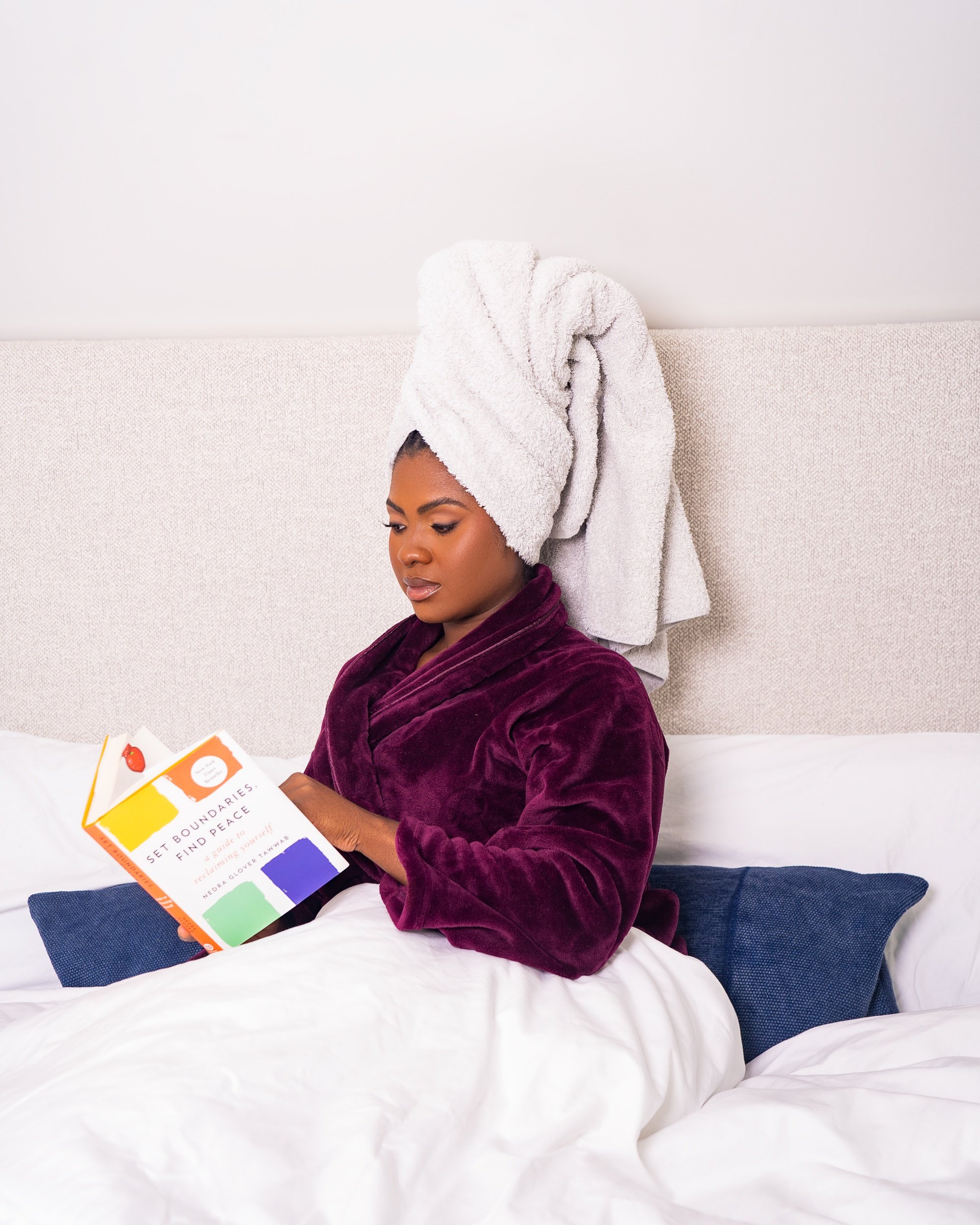
The most loving thing you can do for your life is stop negotiating your needs like they’re optional. Practicing a few simple sentences ahead of time—because in the moment, language is the bridge between intention and action.
“I can’t do that, but thank you for thinking of me.”
“I’m keeping this week quiet.”
“That doesn’t work for me right now.”
“I need more time before I commit.”
Boundaries don’t need to be cold. They just need to be clear. And if you’re someone who over-explains, consider this a gentle permission slip: clarity is not cruelty.
Build one small luxury into the day
This is the KOOMI kind of luxury, nothing loud, nothing excessive. Just attention. A daily moment that tells your senses: we are cared for.
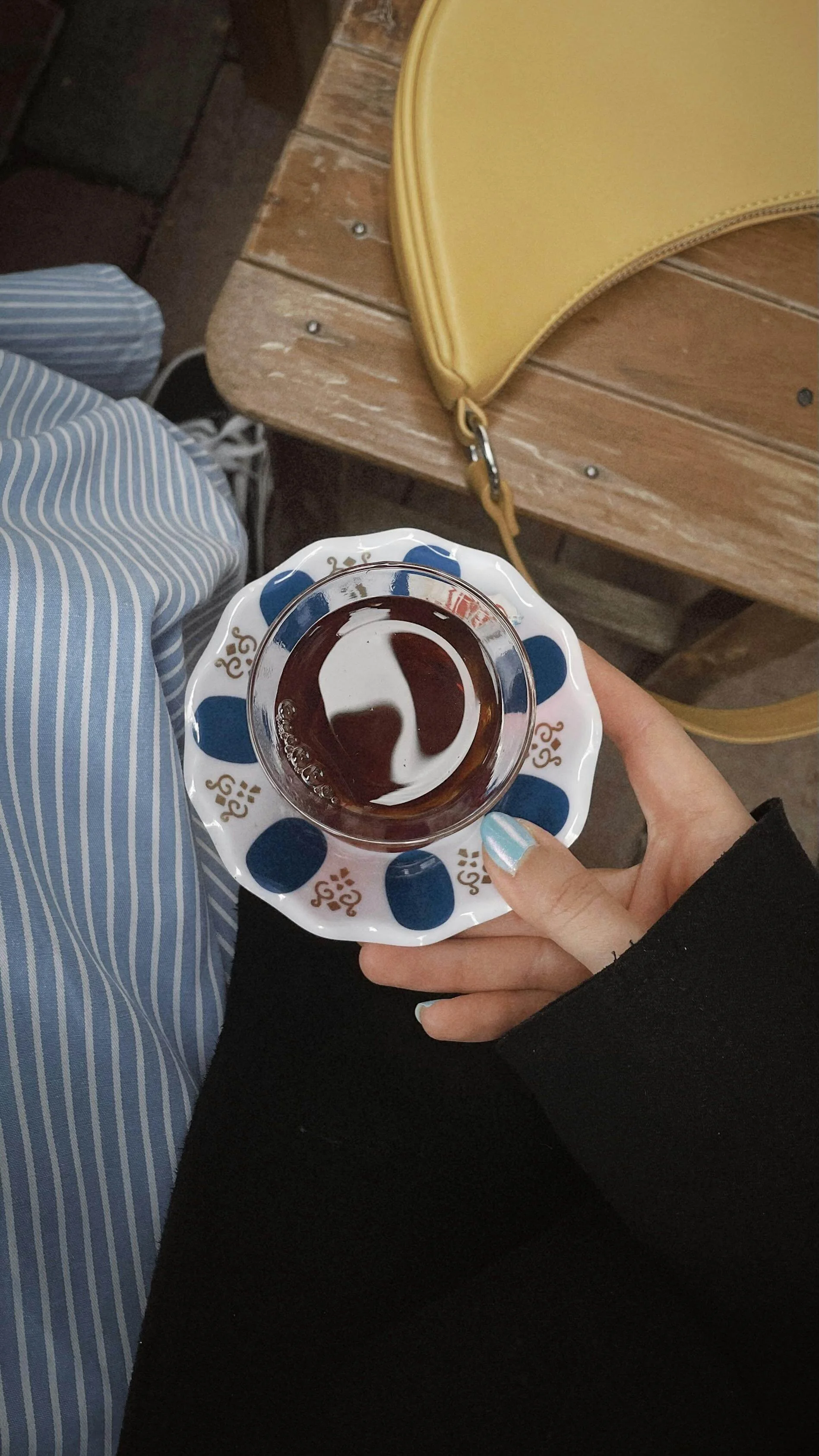
A cup of tea in a real cup, sitting down.
Body oil after a shower, like ceremony, no rush.
Music while tidying one area.
A face massage, slow enough to feel.
Ten minutes outside without the phone.
These aren’t “extras.” They are cues. They tell your nervous system: we’re not in survival right now.
create a weekly anchor, something to return to
Don’t just plan your life. Set the tone.
At the start of the week, ask: What do I want to feel? What do I need to protect? What am I no longer available for?
Then choose three anchors: one for the body, one for connection, one for purpose. Something small, specific, and kind. Not aspirational. Repeatable.
Because intentional living doesn’t mean your week goes perfectly. It means you have something to come back to even when it doesn’t.
Practice repair instead of shame
This is the part most people miss. We treat a hard week like it’s evidence that we can’t be trusted. We restart, overcorrect, punish. But shame doesn’t create change; it just teaches you to disappear.
So choose repair.
Regulate first—one long exhale, feet on the ground, a hand on the chest. Do one tiny ritual. Set one boundary. Drink water. Go to bed earlier. Return to yourself in the smallest way possible.
That is intentional living too: not the perfect week, but the gentle return.
the why beneath it
When you zoom out, intentional living is not self-improvement. It’s self-belonging.
It’s the decision to stop living like your worth is something you have to prove. It’s the choice to treat your attention as sacred, your time as finite, your body as home. It’s the courage to believe that your life doesn’t need to be loud to be meaningful.
Psychologically, we could say this is about creating safety inside the self, so you don’t need constant external validation to feel steady. Culturally, we could say it’s about unlearning inherited urgency. Spiritually, we might call it devotion: to peace, to presence, to the quiet joy of being alive.
Intentional living is how you learn that difference. And when you live from that place, when your yes is true, when your no is clean, when your rituals are nourishing—something changes. Your life stops feeling like a performance. It starts feeling like a relationship one you’re present for, not just managing.
“Peace isn’t the absence of control; it’s knowing what’s yours to hold and what’s not.”
the return
Sometimes I think about that drive, the windshield wipers, the low hum of music, the familiar mind trying to sprint ahead.
The difference now isn’t that worry never shows up. It still does. It slips into conversations uninvited. It waits for me in quiet moments. It tries to convince me that if I think hard enough, plan far enough, do enough, I’ll finally feel safe.
But now, I recognize it. And instead of obeying it, I return.
To my body. To one small ritual. To the next honest choice. To a boundary that protects my softness. To the quiet truth that I don’t have to earn rest, or joy, or belonging. I only have to choose them, gently, consistently, like practice.
Because life is happening right now, not later, not when everything is perfectly arranged.
And I’m choosing to be here for it.
Related Reading
Related reading: What is intentional living? Self Care Checklist living alone